
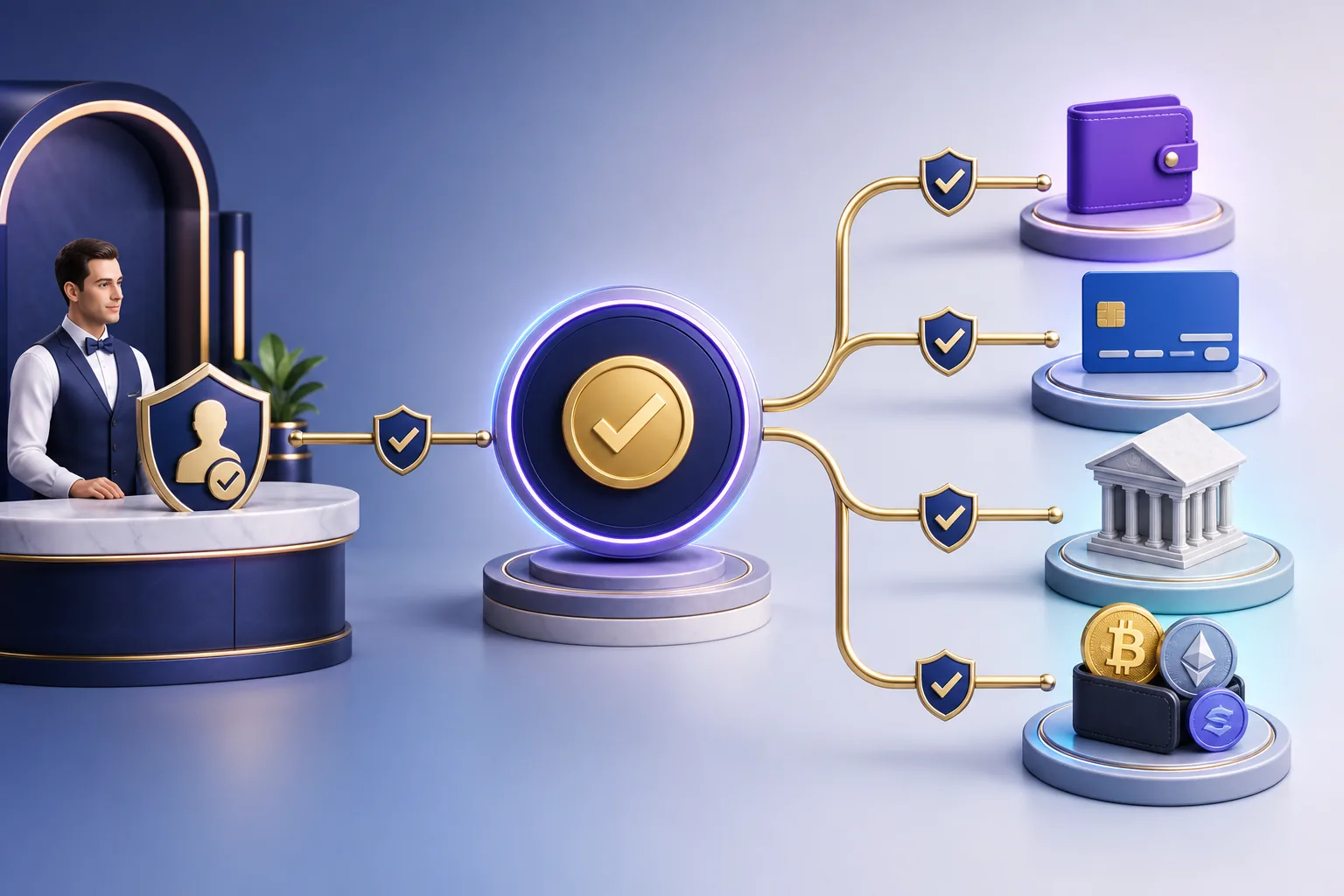
The best casino withdrawal method is the one you can verify end to end
Casino withdrawal methods should be compared by the completed route, not by the moment the operator clicks send. A method is useful only when the verified casino player controls the receiving account, the cashier offers it for the location and currency, the amount fits every limit, and the final provider can identify a missing transfer. Familiarity at the deposit stage is secondary.
Bank transfers and integrated pay-by-bank routes often create a direct ownership trail, but they can involve bank schedules, intermediary handling or reference matching. E-wallets can reduce the number of bank details shared with the casino and may post quickly after approval, yet wallet verification, account currency and cashout fees still matter. Eligible card payouts are convenient when the card can receive them, but deposit acceptance does not prove return-to-card support.
Prepaid vouchers, mobile charges and many tokenised wallet flows are frequently one-way deposit tools. Digital-asset withdrawals can provide a visible network transaction, but address accuracy, network choice, conversion and off-ramp ownership introduce different risks. No category wins universally. The best route is the one whose weak point you understand and can document.
A payout destination should belong to the casino player.
Do not compare methods from approval alone.
The bank, wallet, card or network should be able to locate it.
A funding logo can disappear from the withdrawal menu.
Compare withdrawal categories by what happens after approval
A card payout attempts to return funds through the card ecosystem to an eligible debit or credit account. It can feel seamless when the original card remains active and the issuer supports the transaction type. If the card is prepaid, expired, replaced, disposable or unable to receive credits, the route can fail even though deposits worked. Ask whether the casino sends a card credit, a refund of deposits, or winnings through another destination.
An e-wallet payout moves value from the casino processor into a verified wallet account. The casino may identify the wallet by email, phone or account ID, while the wallet can have its own KYC, balance currencies, receiving restrictions and bank cashout fees. This creates two useful checkpoints but also two sets of terms. The fastest-looking wallet is poor value when the final cashout requires an expensive conversion.
A bank route can be a bank transfer, ACH or eCheck-style payment, Interac product, open-banking initiation or another local transfer. These are not interchangeable. Some create an inbound deposit instruction only; others support a two-way relationship. Record the beneficiary or destination, reference format, expected bank posting stage and the institution that can trace the transfer.
| Method category | Strong when | Main uncertainty | Proof to save |
|---|---|---|---|
| Eligible card payout | The active card can receive credits | Return-to-card eligibility and issuer posting | Masked card, payout reference and posting date |
| Verified e-wallet | Wallet supports casino receipts and suitable currency | Wallet limits, conversion and bank cashout | Wallet transaction ID and account email |
| Bank route | Same-name account and transfer details are verified | Intermediary, reference and bank schedule | Bank trace/reference and beneficiary data |
| Digital asset | Correct address and network are confirmed | Address error, network fee and off-ramp | Transaction hash, address and network |
| Voucher/mobile/prepaid | Used only for a controlled deposit | Usually cannot receive winnings | Fallback payout confirmation before deposit |
Return-to-source and closed-loop rules in plain English
Casinos often try to return money to the source that funded the account where the method supports it. The practical reason is to keep the identity and money trail consistent. This does not always mean every dollar follows one identical route. An operator may return deposited value to a card and send remaining winnings to a verified bank account, or it may require an earlier deposit record on the wallet selected for withdrawal.
Closed-loop language should be read as an account-specific sequence, not a universal rule. Ask how the operator allocates funds when several methods were used, what happens if the original card or wallet is closed, and whether the fallback must be verified before the request. Keep statements showing the original account and any closure or replacement notice.
Do not create a small artificial deposit through a new method merely to activate a withdrawal unless the operator’s official written policy clearly requires a genuine payment relationship and the action is lawful and affordable. A new transaction can start new wagering, risk or ownership checks. The safer approach is to ask for the approved fallback and its evidence requirements before moving more money.
Separate casino review speed from withdrawal-method speed
The withdrawal method usually controls only the external part of the payout. Before that stage, the casino can review identity, payment ownership, bonus conditions, duplicate accounts, transaction history, limits or unusual activity. A wallet that can post quickly after initiation will not shorten a three-day operator queue. A bank transfer that posts later can still be the more predictable route when the ownership and trace information are clean.
Compare methods using at least three timestamps: request submitted, operator sent, and destination received. If the site publishes a pending period, keep that separate from the provider estimate. When a payment is late, these timestamps identify whether support should investigate the internal queue or provide a trace for the external rail.
The first withdrawal often creates more verification work than a later request on the same stable route. That does not guarantee future speed, but it explains why a generic average is weak evidence for a new account. The better test is whether the casino reveals every stage, requests documents promptly and provides a usable reference after sending.
Compare method fees and limits at both ends
A withdrawal advertised as free can still lose value through the wallet, bank, card issuer, intermediary or currency conversion. Calculate from casino balance to spendable funds. If the casino sends euros to a dollar wallet, the wallet converts again to a local bank, and the bank charges an incoming transfer fee, the casino’s zero-fee claim describes only one layer.
Limits also stack. The operator may set a minimum request and daily or weekly maximum. The payment method can set a receiving cap. The account tier can change after verification. A bank can apply transfer or account restrictions. Large balances may be split into several requests, creating repeated fees and review points. Record whether each limit applies per transaction, calendar day, rolling period or account lifetime.
Choose a method that fits the expected amount without unnecessary splitting. For a small withdrawal, a high fixed bank fee can dominate the cost. For a larger withdrawal, a low wallet cap or expensive percentage conversion can be worse. The correct comparison uses the same amount, currency and final destination for every candidate.
Payment ownership, KYC and a destination that matches
The casino profile, withdrawal destination and evidence should identify the same player. A nickname, shortened name, old surname, transliteration difference or joint account can be legitimate, but the difference should be explained with official records rather than ignored. A wallet email or phone can differ from the casino login while the legal owner remains the same; prepare the account profile that proves it.
A casino may request ID, address evidence and proof of the payment account. A bank statement or wallet profile should show enough information to connect the player to the destination while unnecessary sensitive details are masked according to the operator’s secure upload instructions. Never send a password, one-time code, full card security code or complete unmasked card number to support.
Third-party destinations are a major risk. A friend’s wallet, a partner’s card or a purchased verified account breaks the ownership chain and can trigger fraud or anti-money-laundering review. If a third-party method was already used, disclose the facts and follow the formal resolution path. Creating more mismatched transactions makes the evidence problem larger.
The receiving account should belong to the verified casino player. Convenience is not a reason to route a payout through another person.
What a traceable casino payout should give you
After the casino sends a withdrawal, ask for a reference appropriate to the route: a bank transfer reference, ACH trace, card payout reference, wallet transaction ID or digital-asset transaction hash. The exact label varies, but it should connect the outgoing casino record to the receiving provider. A support statement that the money “left our side” is less useful without the date, destination and reference.
Confirm the amount and currency at sending. A receiving bank may search by the settled amount rather than the original casino balance if conversion occurred. For card payouts, the displayed destination can use a token or updated card credential; ask the issuer how replacement cards handle incoming credits. For a digital-asset route, verify both the network and address before submission because a trace can prove where the payment went without making an incorrect address reversible.
If the transfer is returned, determine where the funds are now recorded. They may move back to the casino balance, remain with a processor pending repair, or require a new verified destination. Do not assume a failed receipt automatically restores a playable balance. Request the return reference and the next allowed payout route in writing.
Withdrawal-method choices that look similar but are not
These cases apply the route model to common cashier choices without assuming one casino policy fits every account.
Debit card versus bank transfer
Situation: Both are available, but the active debit card can receive only eligible credits and is near expiry. Likely route diagnosis: The card route has a credential-lifecycle risk while the bank route has a clearer long-term destination.
Best next move: Ask whether the card remains eligible after replacement and compare the bank fee and traceability. Avoid: Do not select the card solely because it funded the account. A stable destination can outweigh a familiar checkout.
Wallet receipt versus wallet cashout
Situation: The casino pays the wallet quickly, but the player ultimately needs money in a bank account. Likely route diagnosis: The route has a second cashout stage with its own conversion, fee and limit.
Best next move: Price the casino-to-wallet and wallet-to-bank stages together. Avoid: Do not call the whole route free because the casino charges nothing. Final spendable funds are the comparison endpoint.
Several deposits, one withdrawal
Situation: The account used a card, wallet and voucher before a single cashout request. Likely route diagnosis: The operator may need to allocate returns across sources and choose a verified destination for winnings.
Best next move: Ask for the order and amount assigned to each route before submitting. Avoid: Do not guess which logo the cashier will select. Multiple funding methods create a route-allocation problem.
The original payment account has closed
Situation: A bank account used months earlier no longer exists when the player withdraws. Likely route diagnosis: The closed-loop destination cannot receive money, but the original ownership still needs evidence.
Best next move: Provide closure evidence and request the operator’s approved same-owner fallback. Avoid: Do not substitute another person’s live account. A broken destination should be repaired with documentation.
A crypto address is visible but the network differs
Situation: The casino and wallet support the same asset name on different networks. Likely route diagnosis: The labels match while the actual settlement rails do not.
Best next move: Confirm the exact network, address format, minimum and fee before submitting. Avoid: Do not use an address simply because the asset ticker looks identical. Network compatibility is part of the destination.
A withdrawal-method selection workflow that starts at receipt
Use this workflow with the same amount and currency for every method. It prevents a fast but low-limit wallet from being compared unfairly with a slower bank route that can receive the full balance. The result should be a written route, not a ranking based on logos.
If a method is unavailable in the live account, remove it regardless of a provider’s general coverage. If the method is deposit-only, keep it in the funding comparison but assign a separate verified payout destination before using it.
- Name the final destinationChoose the bank, card, wallet or address where usable funds must arrive.
- Confirm ownership and eligibilityMatch the legal owner, location, currency and receiving capability.
- Fit the amount to every limitCheck operator, method, account-tier and receiving caps plus reset windows.
- Calculate final costInclude fixed, percentage, conversion, intermediary and later cashout charges.
- Demand traceabilityKnow which reference will locate the payment after operator initiation.
Method comparison record
- Destination owner and currency
- Deposit and withdrawal menu evidence
- All applicable limits and windows
- Final-cost calculation
- Expected sending and trace references
Best question before depositing
“If I fund with this method, which exact account can receive my deposit amount and any winnings, what ownership checks apply, and what fallback is used if the original route cannot accept the payout?”
Sources, scope and what to verify
This guide was reviewed by the PayMethod Guide Editorial Team on 2026-07-19. The team traces the deposit, operator review, payment-provider and receiving-account stages, then checks where fees, limits, KYC and ownership questions can change the route. Volatile operator, provider, licence and country details should always be verified in the live cashier and official terms before money moves.
The sources below support the payment, security or regulatory principles used in this article. A regulator page applies only within its stated jurisdiction; an operator help article illustrates a real cashier workflow rather than proving that every casino uses the same rule.
- UK Gambling Commission: Key issues and expectations concerning account withdrawals
Primary-source discussion of third-party payment methods, payment ownership and withdrawal friction in Great Britain. - UK Gambling Commission: Age, ID and financial verification
Primary-source guidance for Great Britain on identity checks and information requested around withdrawals. - WSOP Nevada: ACH payment-method verification
A market-specific operator example of bank-account ownership evidence requested before an ACH withdrawal. - PCI Security Standards Council: PCI DSS
Official overview of the baseline security requirements for entities that store, process or transmit cardholder data.
Casino withdrawal method FAQs
Which casino withdrawal method is best?
The best method is the one available to the verified player, owned in the same legal name, suitable for the amount and currency, reasonably priced through final receipt and traceable after the operator sends it. A same-name bank or verified wallet can be strong, while an eligible card can be convenient. There is no universal winner across casinos, countries and accounts.
Can I withdraw casino winnings to a different method from my deposit?
Sometimes, especially when the deposit method cannot receive money or the original account is closed. The operator may first return deposited value to the source and send remaining winnings to a verified fallback. Ask for the exact allocation and do not use a third-party destination. Availability depends on the casino, account, provider and local rules.
Are e-wallets faster than bank withdrawals?
An e-wallet may post quickly after operator initiation, but total time includes casino review, wallet verification and any later wallet-to-bank cashout. A bank route may take longer to post yet provide a clearer ownership and trace path. Compare request-to-receipt time for the route you actually need, not provider initiation alone.
Why is my deposit method missing from the withdrawal menu?
The method may be deposit-only, unable to receive casino credits in the market, unsupported for the account currency, or subject to a return-to-source sequence that the cashier handles differently. It can also require verification before appearing. Ask support which destination is approved for the account before making another transaction.
Can I withdraw to a card that I did not use to deposit?
Some operators allow an eligible same-name card after it has been verified or used for a legitimate deposit, while others follow stricter return-to-source rules. Adding a new card only to unlock a payout can create new checks. Ask for the formal fallback process and use an account belonging to the verified player.
What proof should I request after a casino sends a withdrawal?
Request the sending date, amount, currency, destination and a route-specific trace reference. That may be a bank or ACH reference, card payout identifier, wallet transaction ID or network hash. The receiving provider needs more than a screenshot of the casino’s “processed” status to locate a missing payment.
Are prepaid cards and vouchers good withdrawal methods?
Many are funding products and cannot receive winnings. An eligible reloadable card may support certain credits, but the exact card programme and issuer rules matter. Treat a voucher, mobile charge or prepaid code as deposit-only until the live casino and provider terms prove a receiving route. Prepare a verified bank or wallet fallback before deposit.
What if the original withdrawal account is closed?
Keep evidence that the account belonged to you and has closed, then ask the operator for an approved same-owner fallback. The casino may need to return or reroute funds through its processor. Do not substitute a friend’s account or buy a verified wallet; that creates a new ownership mismatch and can deepen the review.
Compare complete withdrawal-route reviews
Move from general withdrawal mechanics to operator-level examples that trace the method, verification gate, route ownership and practical receiving decision together.
Keep payment planning separate from gambling pressure
Gambling involves risk. Use only money you can afford to lose, keep a firm deposit limit, and never deposit again to unlock, verify or accelerate a withdrawal. Check local laws and use the responsible-gambling controls available in your account.