
What deposit-only means in a casino cashier
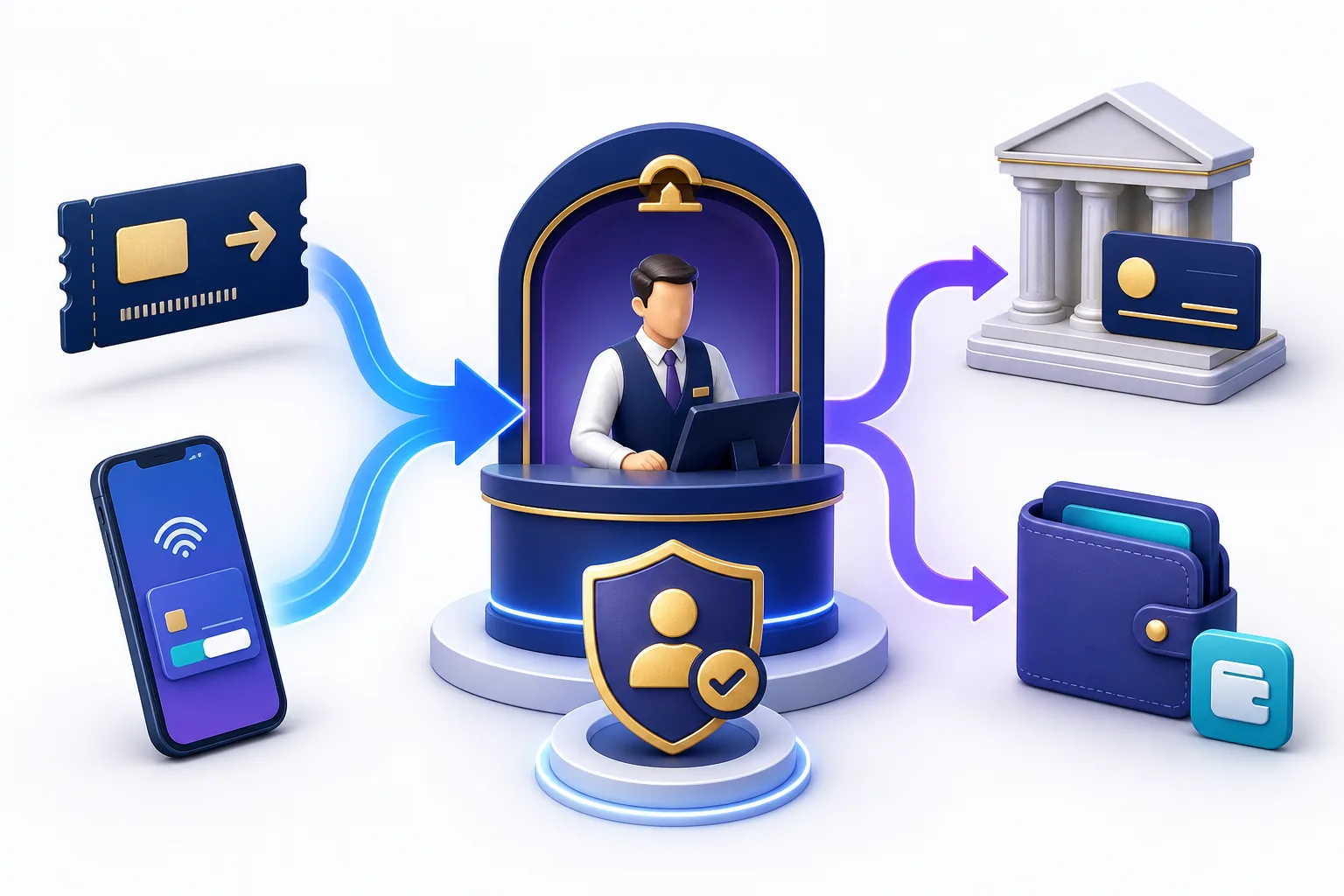
A deposit-only casino payment method can move money into the casino account but cannot receive a withdrawal through the same product or credential. Common examples can include cash vouchers, retail codes, carrier billing, some prepaid or gift cards, cash-loading services and certain tokenised device-wallet arrangements. Exact support depends on the casino, provider, card programme and market; the category should never be inferred from a logo alone.
When the deposit method cannot receive money, the operator needs another route. It may return deposited value through an eligible source where possible and send winnings to a verified bank or e-wallet, or it may direct the whole allowed payout to a same-name fallback after payment ownership and KYC. The sequence, minimum and documents must be confirmed before the one-way deposit is purchased or authorised.
Deposit-only is not automatically poor. A fixed-value voucher can cap the amount exposed and avoid sharing a card number with the cashier. Mobile billing can be convenient for a small transaction. The danger is treating convenience as a complete banking plan. If the fallback is unavailable, expensive, mismatched or hidden until later, the easy deposit becomes a difficult withdrawal.
The original credential may not receive money.
Prepare a same-name bank or wallet.
KYC, fees and limits can appear later.
Only with a known withdrawal plan.
Which casino methods are often deposit-only?
Voucher, carrier, cash-load and some prepaid or tokenised routes often lack a receiving account. The useful distinction is a stored account that can hold incoming value and a one-use funding credential. A code or phone charge authorises value in one direction; a reloadable wallet or bank account can have a distinct incoming-payment capability. This matters because similar checkout branding can hide different product mechanics.
Look for evidence at the point where the route changes hands. Read the withdrawal menu and provider terms for the exact product, not the brand family. A status label or familiar payment logo cannot replace that record. A device wallet can fund through an underlying card while the withdrawal returns to an eligible card or bank instead of to the wallet button.
The practical response is to classify the exact credential and ask whether it can receive casino credits. Record the named fallback and allocation rule. Avoid assuming every e-wallet or prepaid card is one-way. That shortcut can create an inaccurate universal claim, while a documented route keeps the next request answerable.
Where deposited money and winnings go at withdrawal
The casino can treat deposited value and winnings as different parts of the payout route. The useful distinction is return of source funds and payout of remaining balance. Some operators prioritise return to eligible funding sources before sending residual winnings to a verified fallback; deposit-only sources require another permitted destination. This matters because the player may see several payout entries or a method different from the deposit.
Look for evidence at the point where the route changes hands. Ask for the order, amount and destination assigned to each route. A status label or familiar payment logo cannot replace that record. A voucher deposit cannot be credited back to a paper code after it has been redeemed.
The practical response is to get the allocation in writing before submitting the withdrawal. Keep references for each leg until the total balance is received. Avoid assuming one request creates one external transfer. That shortcut can make a partial payout look missing, while a documented route keeps the next request answerable.
Choose and verify the fallback before funding
A fallback should be an existing same-name account that the casino offers for withdrawals. The useful distinction is a true receiving method and a new deposit credential added under pressure. The bank or wallet can require its own verification, currency and limit setup before it appears in the cashier. This matters because creating the fallback after a win can add preventable KYC and ownership delay.
Look for evidence at the point where the route changes hands. Save the live withdrawal listing, account owner, currency, limits and required proof. A status label or familiar payment logo cannot replace that record. A bank statement can prove ownership even when the voucher purchase was anonymous at retail.
The practical response is to complete available verification and ask whether a prior deposit is required. If a legitimate method-linking deposit is required, understand its play and refund consequences first. Avoid using a friend’s account or buying a verified wallet. That shortcut can replace a one-way problem with a third-party mismatch, while a documented route keeps the next request answerable.
Deposit-only fees, bonus treatment and refund limits
One-way convenience can carry purchase, carrier, conversion and fallback withdrawal costs. The useful distinction is the funding price and the final amount received. A voucher reseller may charge a premium, mobile billing may add service cost, and the later bank or wallet route can add its own fee and minimum. This matters because a zero-fee cashier says nothing about the full route.
Look for evidence at the point where the route changes hands. Keep the purchase receipt, face value, casino credit, promotion terms and fallback charges. A status label or familiar payment logo cannot replace that record. A bonus can exclude a wallet or voucher even when the deposit itself succeeds.
The practical response is to calculate cost from money paid to spendable payout and check promotion eligibility before opting in. Review refund rules for unused or failed codes. Avoid buying another code to repair a rejected redemption. That shortcut can increase an often irreversible exposure, while a documented route keeps the next request answerable.
Voucher-code, mobile and prepaid safety checks
Treat a redeemable code like cash and a phone confirmation like a payment authorisation. The useful distinction is official cashier redemption and off-platform code collection. Anyone who sees an unused code can steal its value, while misleading mobile screens can hide recurring or carrier charges. This matters because these transactions can be difficult to reverse.
Look for evidence at the point where the route changes hands. Use authorised sellers, verify amount and merchant, and retain the receipt without exposing the full code. A status label or familiar payment logo cannot replace that record. Support never needs the complete voucher PIN in chat to “verify” a withdrawal.
The practical response is to redeem only inside the official cashier and stop if the merchant or billing frequency is unclear. Use issuer or carrier support for a failed legitimate purchase. Avoid sending codes to agents or recovery services. That shortcut can transfer value with no payout trail, while a documented route keeps the next request answerable.
One-way route questions to answer before buying value
Product identity comes first. A brand can offer several cards, wallets or vouchers with different receiving rights. Name the exact product. Save current provider terms.
Fallback visibility matters. A route hidden until after deposit creates avoidable uncertainty. Ask for the account-specific destination. Keep the written answer.
Receipts preserve value. A voucher or carrier dispute can depend on seller and transaction references. Keep proof until both deposit and later payout settle. Store it without revealing the code.
A practical self-audit before you rely on this one-way payment routes
Retell the route without using promotional labels. For this question, the relevant stages are buy/authorise, redeem, casino balance, verify fallback, withdraw. If you cannot name the account, provider or record at one stage, mark it as unknown. An unknown is not automatically unsafe, but it is a decision cost: support must resolve it before the route deserves trust. The page verdict—use a deposit-only method only when its cost and limits suit a controlled deposit and the casino has already documented a same-name withdrawal destination for the deposit return and any winnings.—should still make sense when every logo and speed badge is removed.
Check whether you are comparing the same event on both sides. The critical distinctions here are a stored account that can hold incoming value and a one-use funding credential; return of source funds and payout of remaining balance; a true receiving method and a new deposit credential added under pressure; the funding price and the final amount received; official cashier redemption and off-platform code collection. A casino term, payment-provider estimate and bank message may each be accurate while describing different parts of the transaction. Put the source beside the stage it controls. This prevents a provider’s broad capability from becoming an unsupported promise about one casino account, country or payout request.
Test the negative path as carefully as the successful path. Ask what happens if the destination rejects the payment, a document is unreadable, the original credential expires, a limit is reached or the account currency changes. The route is stronger when the answer identifies where funds are recorded, which reference proves the return and which same-owner fallback is allowed. “Contact support” is not a complete failure policy unless the support team can name those facts.
Finish with a stop rule. Decide in advance which evidence gap, unexplained delay, ownership conflict or payment request will make you pause rather than deposit or retry. Keep that rule separate from the emotional pressure of a bonus, expiring session or pending balance. Write down the official complaint channel, the account limit you will not exceed and the records you will preserve. If support changes the explanation, compare the new answer with that record instead of starting the whole story again. A good payment decision reduces the number of hurried choices required after money moves; it does not merely make the first click easier.
Repeat the audit whenever one material fact changes. A new payment method, replaced card, changed address, different currency, larger amount or newly requested document can create a route that only looks like the previous one. Date the new evidence and keep the old record so the reason for the change remains visible. Do not silently overwrite a destination or assume an earlier approval covers a new account. This version history helps the casino, provider and receiving institution discuss the same transaction instead of mixing several attempts together.
Compare one realistic alternative before committing. Use the same amount, currency, account owner and final destination, then count the handoffs, checks, limits, fees and trace references on both routes. The alternative is not automatically better because it is newer or faster in a provider advertisement. It is better only when it removes the failure point this guide identifies without introducing a harder ownership, cost or receiving problem. Record why you selected the route so a later support case begins with the original decision rather than a reconstructed guess.
Share evidence by reference, not by oversharing. A support agent usually needs the transaction ID, date, amount, currency, masked account and the specific record that proves ownership or status. They do not need a password, PIN, full security code or one-time authentication code. Keep the master evidence set offline and send only the accepted fields through the verified account channel. If a complaint later moves to a regulator or dispute body, the clean chronology will show what was requested, what was supplied and which question remains unanswered without exposing unrelated financial information.
Before closing the audit, read the current cashier terms once more on the device and account you will actually use. Location, currency, verification status and signed-in account history can change what appears. Save the date of that check and treat any later difference as a new fact to investigate, not permission to reuse an older assumption.
Deposit-only choices and the withdrawal they require
Each example starts with a convenient funding tool and works backward from a real receiving account.
Retail voucher to bank payout
Situation: A player buys a fixed-value code with cash. Likely route diagnosis: The code funds the casino but provides no receiving account.
Best next move: Verify a same-name bank destination and its minimum before redemption. Avoid: Do not wait for a win to discover the bank requirement. Cash funding still leads to digital KYC at payout.
Mobile bill deposit
Situation: The phone account confirms a small charge. Likely route diagnosis: Carrier billing is a funding path, not a bank-like payout balance.
Best next move: Check the bank or wallet fallback and total carrier cost. Avoid: Do not expect winnings on the phone bill. Billing convenience and payout capability are separate.
Prepaid card with no incoming credits
Situation: The card authorises the deposit but its programme blocks payouts. Likely route diagnosis: The network logo does not override programme rules.
Best next move: Keep card ownership proof and request the operator fallback. Avoid: Do not discard the card after deposit. Expired or disposable credentials weaken the trail.
Device wallet token
Situation: The cashier accepts a phone wallet but does not list it for withdrawal. Likely route diagnosis: The deposit used a token over an underlying card.
Best next move: Ask whether the eligible card or a bank receives the return. Avoid: Do not assume the displayed token digits equal the card digits. Tokenisation changes the visible credential.
Rejected voucher code
Situation: The code purchase succeeded but redemption fails. Likely route diagnosis: Value may remain with the issuer rather than the casino.
Best next move: Use the authorised seller and issuer references to locate it. Avoid: Do not buy a second code or share the first PIN. Resolve the issuer stage before changing methods.
Build a payout plan for a deposit-only method
Write the one-way funding leg and the separate receiving leg before purchasing or authorising value.
If the casino cannot name the fallback, choose a two-way method instead.
- Identify the exact productVoucher, carrier charge, prepaid card, cash load or token.
- Prove it is one-wayCheck the live withdrawal menu and provider capability.
- Choose the receiving accountUse a verified same-name bank or wallet.
- Price both legsInclude purchase, conversion and payout cost.
- Save both evidence setsFunding receipt plus withdrawal account proof.
One-way payment record
- Product and issuer
- Purchase/authorisation receipt
- Casino deposit reference
- Fallback account and owner
- Allocation, limits and fees
Best deposit-only question
“Because this method cannot receive winnings, which verified account will receive my deposited value and remaining balance, what proof is required, and will I need any additional transaction to activate that route?”
Sources, scope and what to verify
This guide was reviewed by the PayMethod Guide Editorial Team on 2026-07-19. The team traces the deposit, operator review, payment-provider and receiving-account stages, then checks where fees, limits, KYC and ownership questions can change the route. Volatile operator, provider, licence and country details should always be verified in the live cashier and official terms before money moves.
The sources below support the payment, security or regulatory principles used in this article. A regulator page applies only within its stated jurisdiction; an operator help article illustrates a real cashier workflow rather than proving that every casino uses the same rule.
- UK Gambling Commission: Key issues and expectations concerning account withdrawals
Primary-source discussion of third-party payment methods, payment ownership and withdrawal friction in Great Britain. - PCI Security Standards Council: PCI DSS
Official overview of the baseline security requirements for entities that store, process or transmit cardholder data.
Deposit-only casino payment FAQs
What is a deposit-only casino payment method?
It is a method that can fund the casino account but cannot receive a withdrawal through the same product or credential. The operator must use an eligible original source or a separate verified bank, card or wallet. Confirm the exact fallback, allocation and documents before depositing.
Which casino payment methods are deposit-only?
Cash vouchers, carrier billing, retail cash-loading and many gift or prepaid products are often one-way. Some device-wallet or bank-initiation routes also show different payout destinations. Exact support depends on the product, casino, provider and market, so check deposit and withdrawal menus separately.
How do I withdraw after using a voucher?
The casino usually requires a verified bank, card or e-wallet that belongs to the player. It may allocate deposited value and winnings according to its return-to-source policy. Prepare the fallback, KYC and minimum before buying or redeeming the voucher.
Can casino winnings go back to my phone bill?
Carrier billing normally charges the mobile account and does not operate as a receiving balance for casino winnings. A bank, card or wallet fallback is usually needed. Check the exact casino and carrier product rather than assuming every mobile payment works alike.
Is a prepaid card always deposit-only?
No. Some reloadable programmes can receive eligible credits, while gift, disposable or restricted prepaid cards cannot. The issuer programme, casino processor and market decide. Keep the card and ownership records until the full payout route is settled.
Do deposit-only methods avoid KYC?
No. A cash-like or prepaid deposit does not remove the casino’s identity, age, ownership or source obligations. KYC can appear before play or payout depending on applicable rules and risk. The receiving bank or wallet must normally be connected to the verified player.
Can I use a friend’s bank for the withdrawal?
No. A third-party account breaks the ownership chain and can trigger rejection or fraud review. Use a destination belonging to the verified casino player. If no suitable account exists, do not make the one-way deposit until the operator provides an approved lawful solution.
Are deposit-only methods bad?
Not automatically. They can cap a deposit, support cash purchase or avoid entering card details at the cashier. They become poor choices when the payout is unknown, the purchase is expensive, codes are exposed or the fallback adds verification and limits the player did not plan.
Keep payment planning separate from gambling pressure
Gambling involves risk. Use only money you can afford to lose, keep a firm deposit limit, and never deposit again to unlock, verify or accelerate a withdrawal. Check local laws and use the responsible-gambling controls available in your account.